(Oops! Here is the correct link to go to the April 2012 turning tip)
 My Way of Sharpening a Skew

by Phil Colson
Woodturner
It goes without saying that if you are using a skew, it must be sharp. A dull skew might as well be used
as a hammer (though I would not recommend it).
When I started turning, I spent some time studying with the nationally known turner,
Nick Cook, who happens to also be known as Mr. Skew. I chose to study with Nick because he is a production turner and
was able to teach me how to use turning tools efficiently.
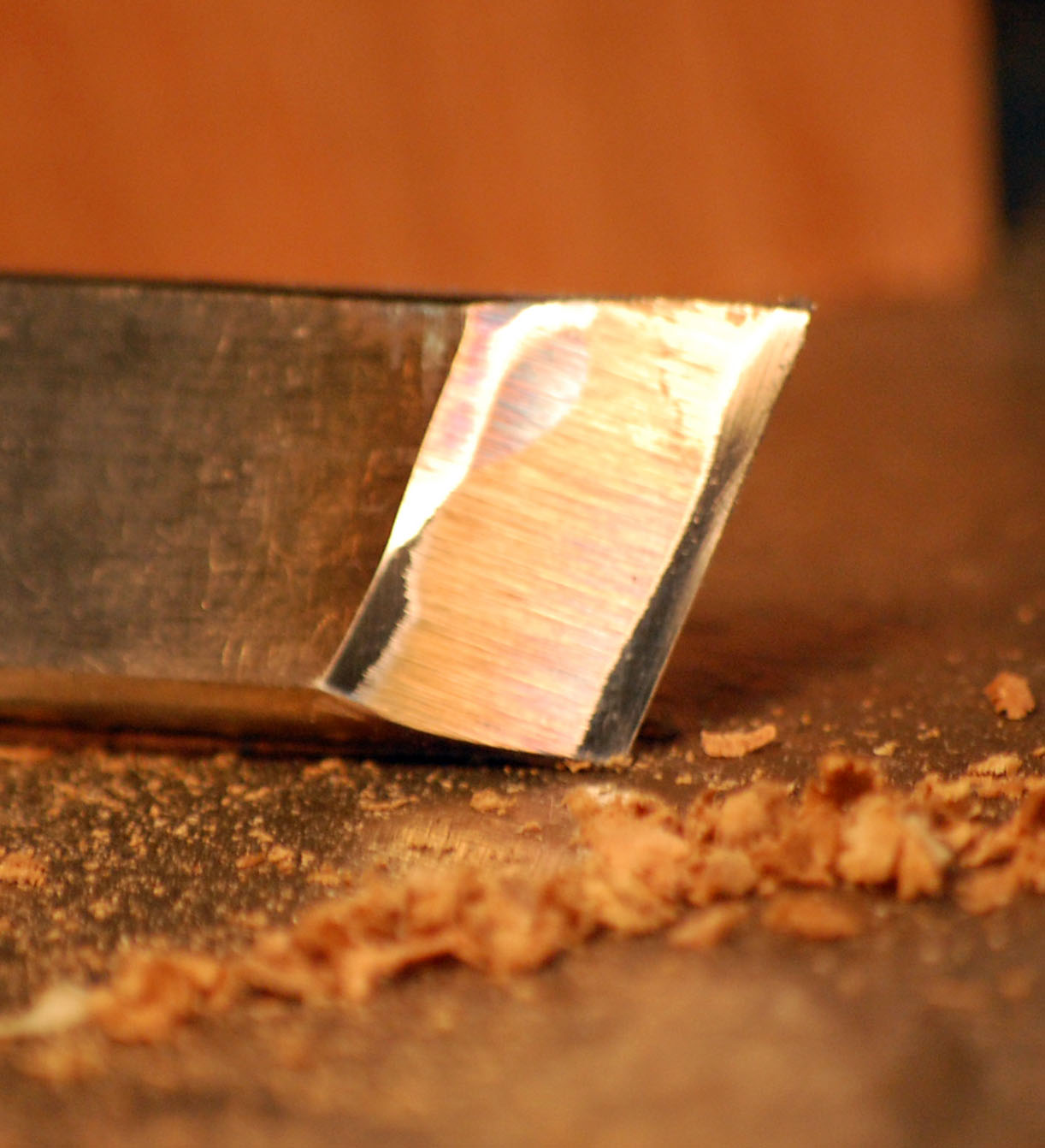
You could shave with one of Nick's skews. He uses a
Tormek
sharpening system
to sharpen his skews. I think the Tormek is the finest sharpening system in the
world, but I could not justify the expense just to sharpen my skew, as I don't use the skew all that
much. For the few times that I do use a skew, I needed a way to get it really sharp. I came up with a
system that works for me.
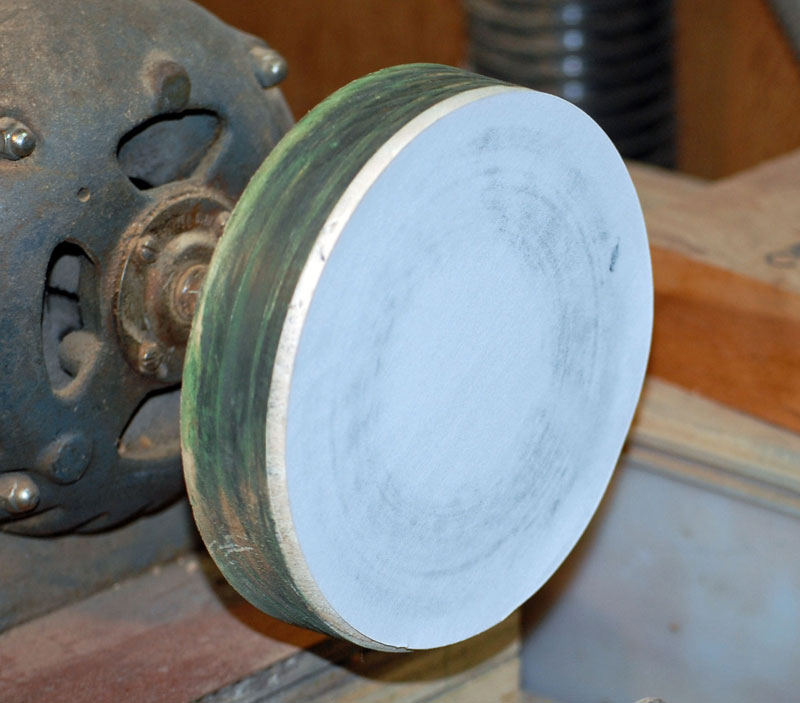
 I attached a two-inch-thick piece of basswood to a faceplate. After turning the basswood blank round
and facing it off flat, I set about experimenting with different grits of self-sticking sandpaper
attached to the basswood blank to see which one gave me the best edge. I settled
on 400 grit paper. Running at a low speed, it sharpens the skew to a razor edge and polishes it.
I attached a two-inch-thick piece of basswood to a faceplate. After turning the basswood blank round
and facing it off flat, I set about experimenting with different grits of self-sticking sandpaper
attached to the basswood blank to see which one gave me the best edge. I settled
on 400 grit paper. Running at a low speed, it sharpens the skew to a razor edge and polishes it.
You can attach this device to
an old motor like I did, or use it on your lathe.
Honing the skew's edge is done after the bevel has been shaped with a grinder, typically to a hollow grind.
(Once shaped, the bevel does not need regrinding again until the hollow grind has been mostly honed away).
When starting out, it is best to present the tool's bevel to the sandpaper so that the bevel points in the
direction the disk is rotating (and hence the handle is pointed opposite the direction of rotation).
I typically do it free hand, but if you don't feel comfortable doing it free hand, use your tool rest.
I also use this system to hone some of my other tools when I want an exceptional edge.
Phil can be reached directly via email at
woodturnerphil@gmail.com.
Take a look at
Highland Woodworking's great selection of Woodturning products
Return to
The Highland Woodturner
front page